Showing posts with label Ornament. Show all posts

Sunday, February 15, 2015

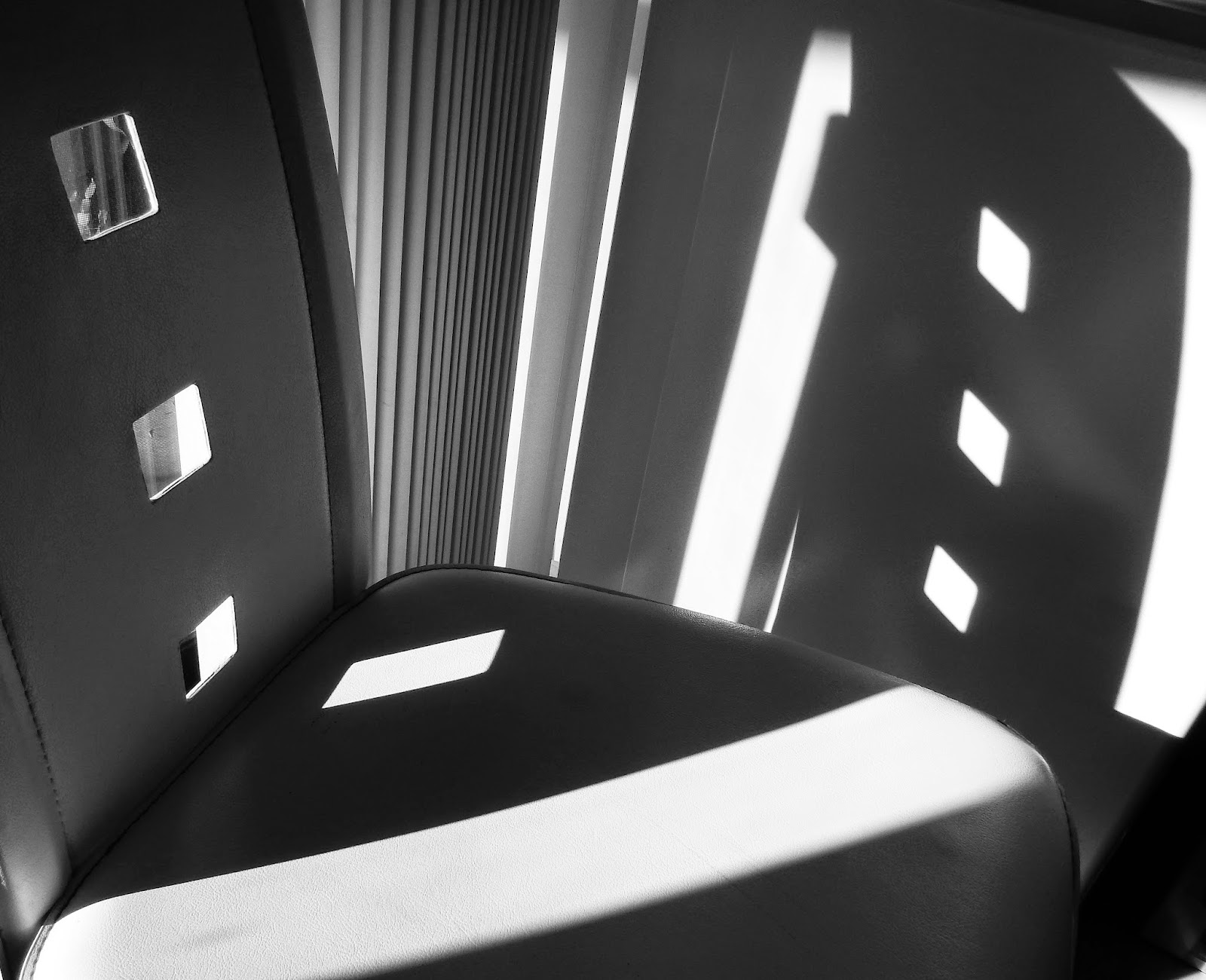
The shadow of a chair. La sombra de una silla


It is well understood that architecture is not interior decor. Though, there are lots of architects who dedicate to the design of furniture, which at last are part of the architecture.
I´m more positioned on Loos´ side, good architecture, in my humble opinion, doesn´t need any decoration. But how dull a kitchen would look without the table, and the clothes, and the chairs....
I am trying to show here how a simple element, like a white leather chair can produce an interesting effect in a boring corner of the kitchen, a concept that makes me think twice about my Loos´ position, at least today, while having breakfast and enjoying the sunlight through the glass doors at 8 AM.

Somebody, and most probably my husband, has left the chair aside, and the hard shadow was drawn on it and on the free standing freezer. Besides, there´s the white shutters behind. All of a sudden, there´s an interesting effect.
Though I was expecting I could take a couple of bright white abstract pictures, my camera wouldn´t allow me to, so I switched to expressionist shots to illustrate my point.


Wednesday, January 22, 2014

Images from the book Fantastic Ornament


I am sharing today some beautiful illustrations from the book Fantastic Ornament 100 Designs and Motifs, by Michel Lienard. They are my screen shots from the preview, except the last one that I´ve downloaded from Google images. Enjoy!


Monday, January 13, 2014

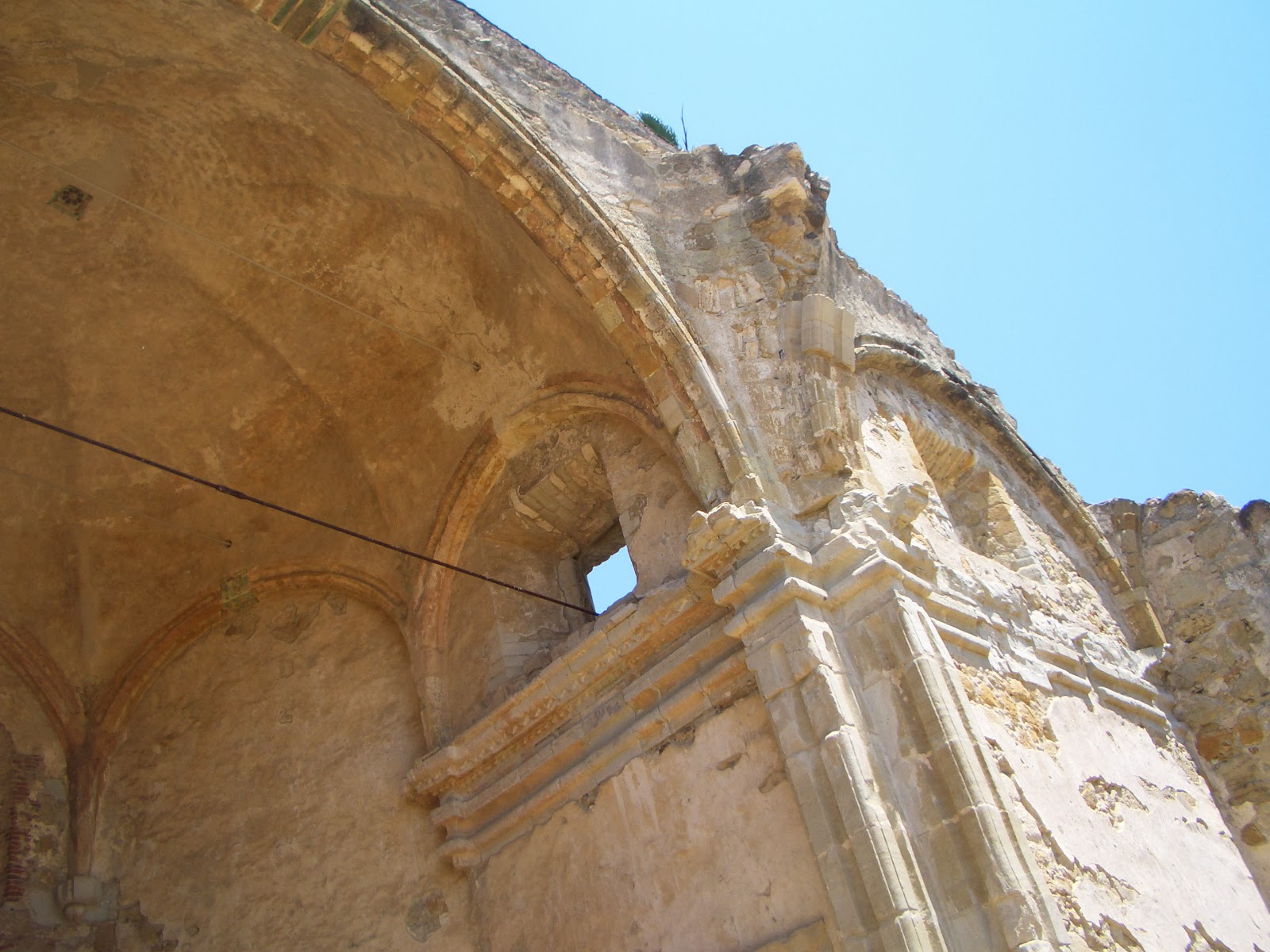
My pictures from the Mission of San Juan Capistrano, California


The story begins in 1775, when Mission San Juan Capistrano was first founded by Father Lasuen, on October 30th. But just a few weeks after the party of padres and soldiers arrived, they received word of the revolt occurring in San Diego. The founding padres, and soldiers decided to leave San Juan Capistrano, and go back to San Diego to help there. Once things had settled in San Diego, Father Serra personally led a party to re-found Mission San Juan Capistrano on All Saint’s Day, November 1, 1776.
Mission San Juan Capistrano, became the seventh of twenty-one missions to be founded in Alta California. Like the previous six missions, San Juan Capistrano was established to expand the territorial boundaries of Spain, and to spread Christianity to the Native peoples of California. Unlike the British colonies on the East Coast of North America, who brought people from their homeland to form colonies, the Spanish believed they could transform the Native peoples into good Spanish citizens. (.....)


After 1812, the Mission began to decline. Many factors were involved in the Missions decline including the earthquake in December of 1812 which caused the Great Stone Church to collapse, the decline in birth rate, the increasing mortality rate of the population due to disease, the inability of Spanish government to adequately protect and supply the Missions with needed goods.
By 1821, Mexico won its independence from Spain, which made Alta California a territory of Mexico. Under new governmental direction, the Mission faced continued decline. By 1834, the Mexican government decided to end the mission system entirely. Soon after the decree of secularization, or the ending of the missions, the land holdings of Mission San Juan Capistrano were divided and sold to 20 prominent California families. By 1845, Governor Pio Pico even sold the Mission itself. The Mission was sold at auction to John Forster, Governor Pio Pico’s brother-in-law for $710, when it was valued to be worth more than $54,000. For the next 20 years the Mission was a private ranch property of the Forster family.
Mission San Juan Capistrano, like California, saw yet another government take over California, when the United States won the Mexican American War in 1848. As part of the Treaty of Guadalupe Hidalgo, California and other western territories were ceded to the United States. With the Gold Rush beginning, and millions of Americans moving to California, Mission San Juan Capistrano would see another great change.


Only a few years after acquiring the territory of California, the United States declared it a state 1850. Many California dioceses and parishioners petitioned the government to have mission buildings and lands returned to the church. People were saddened at the state of the missions. Some mission buildings had been turned into stores, bars, inns, or even stables. Most were falling apart and not maintained.
President Abraham Lincoln responded to the petitioners by giving back the missions to the Catholic Church. By the 1870s and early 1900s, artists, photographers, and visionaries took interest in the abandoned missions. Many wealthy individuals formed groups to campaign for restoration. The Landmarks Club, led by Charles Lummis and resident padre Father John O’Sullivan were Mission San Juan Capistrano’s greatest proponents of preservation. Throughout the 1910s-1940s a great amount of preservation work ensued.
The Mission continues efforts in preservation, with the help of donations each year. Although the Mission is owned by the Catholic Church, it is run by a non-profit organization. This means, Mission San Juan Capistrano does not receive any funding from the Catholic Church, State, or Federal Government for operation or preservation. It depends entirely on the generous contributions of visitors and benefactors. (...)

Source: 


Saturday, June 22, 2013

Old street lamp posts in Southern California

Crowd on a city street (near 5th Street and Coast Federal Savings building)     Joseph Fadler  1970

I´ve always said that Southern California, having a young history of a little more than 100 years, invented its own history.
When you have to design for a historical city or zoning, strict design guidelines have to be followed, and everything has to be ¨to match existing;¨  the historical subject of a particular city must be always present.
That´s why you see the stone pillasters in La Verne everywhere, in signs but also in modern gas stations, with no care for the scale, or the Spanish planters with geranios at the public parking in Santa Barbara, or the street lamps we see here, depicting religious crosses, or a bridge!!!
I´ve been through the project called Form and Landscape which I really enjoyed. It is an on line exhibition of the street scape of Los Angeles and surrounding areas, supported by Edison, the electrical company.
I´ve selected these curious lamps from the exhibition and there is much more to see here:

Street lighting post (Riverside Type) 1916

Mission Bell Streetlights    Art Adams     1966

Rialto Street light post    1916

Lighting, streets    G. Haven Bishop    1912

In the most dazzling displays, some lamp post constellations are crowned with elaborate suns or transformed into starbursts and supernovas.

Wednesday, January 9, 2013

Changes of habitat in the XIX Century, in the words of Virginia Woolf

Storm clouds gather and lightning strikes over the Houses of Parliament
thetimes.co.uk


I ended 2012 reading Virgina Woolf´s Orlando, which I enjoyed, specially the beginning of chapter V, where she explains the evolution of the century through a climate change.
And as a consequence, the clothes, the houses, the interior design, the landscape, were changed, due to the damp that filled everything, including the hearts.
I think the following paragraphs are a beautiful way of explaining the European habitat (though she refers to England). Of course there are many great passages in the book, but these are my favorite ones:

THE GREAT CLOUD WHICH HUNG, not only over London, but over the whole of the British Isles on the first day of the nineteenth century stayed, or rather, did not stay, for it was buffeted about constantly by blustering gales, long enough to, have extraordinary consequences upon those who lived beneath its shadow. A change seemed to have come over the climate of England. Rain fell frequently, but only in fitful gusts, which were no sooner over than they began again. The sun shone, of course, but it was so girt about with clouds and the air was so saturated with water, that its beams were discoloured — and purples, oranges, and reds of a dull sort took the place of the more positive landscapes of the eighteenth century. 
 Under this bruised and sullen canopy the green of the cabbages was less intense, and the white of the snow was muddied. But what was worse, damp now began to make its way into every house — damp, which is the most insidious of all enemies, for while the sun can be shut out by blinds, and the frost roasted by a hot fire, damp steals in while we sleep; damp is silent, imperceptible, ubiquitous. 
Damp swells the wod, furs, the kettle, rusts the iron, rots the stone.  So gradual is the process, that it is not until we pick up some chest of drawers, or coal scuttle, and the whole thing drops to pieces in our hands, that we suspect even that the disease is at work. Thus, stealthily and imperceptibly, none marking the exact day or hour of the change, the constitution of England was altered and nobody knew it. Everywhere the effects were felt. The hardy country gentleman, who had sat down gladly to a meal of ale and beef in a room designed, perhaps by the brothers Adam, with classic dignity, now felt chilly. Rugs appeared; beards were grown; trousers were fastened tight under the instep. The chill which he felt in his legs the country gentleman soon transferred to his house; furniture was muffled; walls and tables were covered; nothing was left bare. 
Then a change of diet became essential. The muffin was invented and the crumpet. Coffee supplanted the after-dinner port, and, as coffee led to a drawing-room in which to drink it, and a drawing-room to glass cases, and glass cases to artificial flowers, and artificial flowers to mantelpieces, and mantelpieces to pianofortes, and pianofortes to drawing room ballads, and drawing-room ballads (skipping a stage or two) to innumerable little  dogs, mats, and china ornaments, the home — which had become extremely important- was completely altered.
Outside the house — it was another effect of the damp — ivy grew in unparalleled profusion. Houses that had been of bare stone were smothered in greenery. No garden, however formal its original design, lacked a shrubbery, a wilderness, a maze. What light penetrated to the bedrooms where children were born was naturally of an obfusc green, and what light penetrated to the drawing-rooms where grown men and women lived came through curtains of brown and purple plush. 
But the change did not stop at outward things. The damp struck within. Men felt the chill in their hearts; the damp in their minds. In a desperate effort to snuggle their feelings into some sort of warmth one subterfuge was tried after another. Love, birth, and death were all swaddled in a variety of fine phrases. The sexes drew further and further apart. No open conversation was tolerated.

Wednesday, October 24, 2012

Golden Moon. By LEAD archs


I'm sharing part of the great post at archdaily.com, an amazing temporary structure by LEAD archs.

Location: 

Architects: Kristof Crolla, Adam Fingrut
Year: 2012
Photographs: Kevin Ng, Grandy Lui, Pano Kalogeropoulos, Courtesy of , Courtesy of Hong Kong Tourism Board


" The Golden Moon is a temporary architectural structure that explores how Hong Kong’s unique building traditions and craftsmanship can be combined with contemporary design techniques in the creation of a highly expressive and captivating public event space. It is the 2012 Gold Award winning entry for the Lantern Wonderland design competition organised by the Hong Kong Tourism Board for the Mid-Autumn Festival and was on display for 6 days in Hong Kong’s Victoria Park." 

Friday, September 28, 2012

Picture of the day: Golden Pavilion, Japan


Golden Pavilion ( Nick Aura ) The Golden Pavilion temple and its grounds are stunning in Kyoto, Japan. Buddhist temple gardens are among the many admirable things that make Japan a singular destination.

LinkWithin

Related Posts with Thumbnails