Friday, February 19, 2010

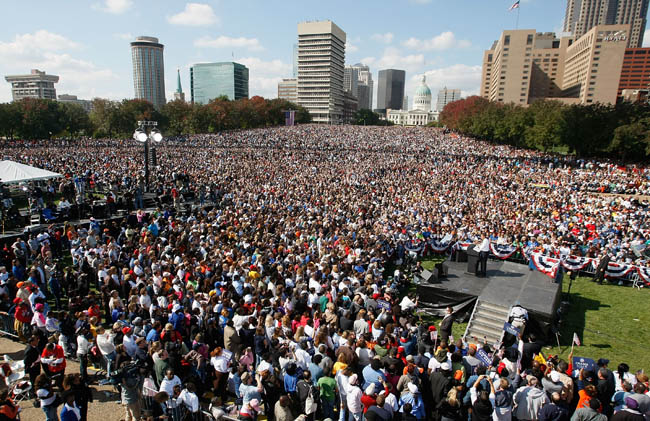
The City and the Crowds

The man of the crowd. Painting by Brian Pedley

In an article published on August 15, 2007 at  The Independent. Opinion, there is a letter titled ¨Hurrying city crowds bump into people of all colours and creeds¨, as follows:
¨Sir: Margaret Busby (Opinion ,13 August) asserts that her blackness makes her both invisible and highly visible, causing people in London to discourteously bump into her and afford her disproportionate attention or suspicion.
Might I suggest that people bump into each other every minute of the day in London because there are lots of people in London trying, in vain, to get somewhere quickly? They lead busy, stressful lives and try their best to avoid or ignore others in an attempt to mitigate the aggravation and anxiety of living in such a congested and pressured environment.
I have suffered humiliation, rejection, disappointment, suspicion, and people bumping into me but I do not have the luxury of blaming all my frustrations on my skin colour or gender. Life is trying for everyone and very few achieve their aspirations regardless of race, gender, sexuality or creed.
The next time a stranger "crashes into" you it is worth considering that the offending person is probably cursing your discourtesy in "crashing into" them.
DAVE MAGNER¨
Implicitly, I find here the anonymity  of the crowds in the city, a non guilty unity of deformed mass, that feeds into spontaneity and violence; but suddenly, somebody could be an expectant spectator, who feels like an outsider, an alien. Nevertheless, the spectator may also be entangled by the crowd again, in a never ending process, being outside, being inside, being one, but never being one in all. The idea that crowds demonstrate bizarre, almost pathological behavior was launched by the eminent French sociologist Gustave Le Bon. He discussed that a crowd was more than just the sum of its members, it was a kind of independent organism. It had an entity and a will of its own, and it often acted in ways that no one within the crowd intended. A crowd could be brave or cruel, but never smart. ( James Surowiecki, The wisdom of crowds, 2004). Benito Mussolini said "The mass, whether it be a crowd or an army, is vile"


The subject  was treated many times in literature, and I´d like to show some examples:
 Howard Phillips Lovecraft (1890-1937), the inventor of ¨cosmic horror¨, was an ardent scientific materialist that developed a psychopathic social and political and racist ideas. In his letter to Frank Belnap Long, in 1924, recounting his visit to Chinatown in New York, two years before, he describes it as a ¨nightmare of perfect infection¨ in Hitlerian words:
¨The organic things –Italo-Semitico-Mongoloid- inhabiting that awful cesspool could not by any stretch of imagination be call´d human.  They were monstrous and nebulous adumbrations of the pithecanthropoid and amoebal; vaguely moulding from some stinking viscous slime of earth corruption, and slithering and oozing in and on the filthy streets … They -or the gelatinous fermentation- of which they are composed seemed to ooze, seep and trickle thro´  the gaping cracks in the horrible houses … and I thought of ….unwhole –some bats crammed to the vomiting point with gangrenous vileness¨. (De Lévy, 28-29)

From Eliot´s ¨The Waste Land¨, I read

¨Unreal city,
Under the brown fog of winter dawn
A crowd flowed over London Bridge, so many,
I had not thought death had undone so many.
Sighs, short and infrequent were exhaled,
And each man fixed his eyes before his feet.
Flowed up the hill and down King William Street….¨

It shows a lack of individual will, the flow suggests an inform organic matter, and the eyes before the feet, suggests a zombie like vacantness. (Jack Morgan)
This is Edgar Alan Poe description of the rush hour in London, in his tale ¨The Man of the Crowd¨, and the location of his  story is not casual,  by 1840, London was the largest city in the world with a population of 750,000 (data from Wikipedia.org)
This latter is one of the principal thoroughfares of the city, and had been very much crowded during the whole day. But, as the darkness came on, the throng momently increased; and, by the time the lamps were well lighted, two dense and continuous tides of population were rushing past the door. At this particular period of the evening I had never before been in a similar situation, and the tumultuous sea of human heads filled me, therefore, with a delicious novelty of emotion. I gave up, at length, all care of things within the hotel, and became absorbed in contemplation of the scene without.
At first my observations took an abstract and generalizing turn. I looked at the passengers in masses, and thought of them in their aggregate relations. Soon, however, I descended to details, and regarded with minute interest the innumerable varieties of figure, dress, air, gait, visage, and expression of countenance.
One of the interpretations of this story, is that the mean old man who the narrator pursues, is the dark side of his own personality. Is this a way to lose one´s anonymity?
Safe Creative
#1002205555827


Artículo: Todas las plazas porteñas están contaminadas con un parásito

Foto de lanacion.com
Artículo publicado en Lanacion.com el día de hoy por María Gabriela Ensinck.
Pisarlas no trae buena suerte. Las heces de perro y gato que "adornan" las calles, los areneros y las plazas contienen un parásito, la Toxocara canis , que se transmite a las personas y puede provocar daños en la vista y problemas cutáneos y hepáticos. Los más afectados son los chicos, por estar más tiempo cerca del piso y por esa costumbre de llevarse las manos sucias a la boca.
Según un relevamiento de la Cátedra de Parasitología General de la Facultad de Ciencias Exactas y Naturales de la UBA, el 100% de las plazas porteñas estudiadas están contaminadas con huevos de ese parásito. Otro tanto ocurre en varias ciudades del interior, a juzgar por un estudio reciente del Instituto de Medicina Regional de la Universidad Nacional del Nordeste (UNNE), que constató la presencia del parásito en chicos y en espacios públicos de Resistencia y Corrientes.
La infección por Toxocara no es fácil de diagnosticar. "La mayor parte de las veces no tiene síntomas y sólo presenta eosinofilia [aumento de un tipo de glóbulos blancos]", destaca el doctor Jaime Altech, especialista en Parasitología y Chagas del Hospital de Niños Ricardo Gutiérrez.
Los demás signos son bastante comunes: fiebre, inflamación de ganglios o del hígado, anemia, todos síntomas también de otras enfermedades. La infección "puede afectar la vista, cuando la larva del parásito se deposita en el globo ocular, y ocasionar la pérdida de la visión", destaca el médico................Países como Francia realizan campañas de concientización muy fuertes e implementan importantes multas para los dueños de mascotas desaprensivos que dejan la materia fecal de sus animalitos en la calle o los espacios públicos.
DONDE CONSULTAR
Departamento de Parasitología y Chagas del Hospital de Niños Ricardo Gutiérrez: (011) 4962-9247 o www.guti.gov.ar .
Hospital de Pediatría Prof. Juan P. Garrahan: (011) 4308-4300 o www.garrahan.gob.ar .
Instituto de Zoonosis Luis Pasteur: (011) 4982-8421 y 4504.

Wednesday, February 17, 2010

The City and its Skins

The pictures about the tower skins are taken from the article´s link, see reference below.

There is a curious article by Darren Quick at gizmag.com, published February 11th, 2010: “Using a skin graft to give city eyesores an eco-friendly face-lift”. Here is an excerpt:
“The Laboratory for Visionary Architecture (LAVA) proposes a simple, cost effective, easily constructed skin that promises to transform dated structures into sustainable and stunning buildings.
The “Tower Skin” concept is a transparent cocoon made of high performance composite mesh textile that is wrapped around an existing structure to act as a high-performance “micro climate”. Surface tension allows the membrane to freely stretch around walls and roof elements achieving maximum visual impact with minimal material effort. The skin is also easily repairable, is removable and upgradable and features a self-cleaning coating.
It generates energy with photovoltaic cells, collects rainwater, improves day lighting and uses available convective energy to power the towers’ ventilation requirements. Natural convection draws conditioned air through existing rooms and vents it to the exterior to generate energy. The skin is also an intelligent media surface that can be used for dynamic animation and communicating information such as performances and campus events in real time.
The architectural system for re-purposing inefficient and outdated buildings without resorting to demolition and rebuilding began as a speculative proposal by multinational architectural practice, LAVA, for a re-shaping of the University of Technology (UTS) Broadway Tower in Sydney, Australia, which has long been known as Sydney’s ugliest building”.


The skin is proposed, for instance, to cover abandoned buildings, but my question is, who could decide which buildings need this type of skin? There is no consensus about what is a “good aesthetic” for the city, and that’s correct, many architectural styles live together and nobody has the right to say “this is the best”, unless the words are related to an specific issue. What about context? If the neighborhood is historical, is it a good idea to add these skins? Is it better than preservation? I don’t think so. If this project has a certain feasibility, I hope buildings won’t be converted into simple sculptures. A building is much more than a sculpture.
This is not the same concept developed by the wrapping artist Christo. He causes a huge impact in urban and rural environments for a certain period of time, but he and Jeanne Claude do not intend to change the city.

Christo and Jeanne-Claude Wrapped Reichstag, Berlin 1971-95 Photo: Wolfgang Volz. From http://www.christojeanneclaude.net/wr.shtml

Read the complete article
http://www.gizmag.com/tower-skin-concept/14154/


Monday, February 15, 2010

Invitation to my new blog the club of compulsive readers- Invitación a mi nuevo blog

I´m inviting you to visit my brand new blog
http://theclubofcompulsivereaders.blogspot.com/
As it has only one day and a night, it is still not visible at google or yahoo, but you can click from here or on the right side of this blog ¨blogs I follow¨. I will not  be explaining the subject of books, because it is obvious for me somebody who visits me there, knows a lot about books, articles, etc. My intention is, as always, the analysis from an architect´s point of view -I do not belong to the field of literature- and also expose some interesting issues, anecdotes and stories that are not found on line. Like this blog, some posts are in English, some in Spanish. I think it is convenient when there is an excerpt that is important to show in the original language. Anyway, there is a translator on the right side bar. I hope you join me in this adventure!
Los invito a visitar mi nuevo blog 
http://theclubofcompulsivereaders.blogspot.com/
Como sólo tiene un día y una noche, aún no está visible en los buscadores de google o yahoo, pero pueden clickear desde aquí o desde la barra derecha en este blog, en ¨blogs I follow¨. Yo no estaré explicando la temática de los libros, porque para mí es obvio que quien me visite allí, conoce mucho acerca de libros, artículos, etc. Mi intención, como siempre, es el análisis desde el punto de vista de un arquitecto -yo no pertenezco al campo de la literatura- y también exponer algunas cuestiones interesantes, anécdotas e historias que no se encuentran en las redes. Como en este blog, hay posts en inglés y otros en español. Pienso que es conveniente cuando hay un texto que es importante mostrarlo en su idioma original. De todos modos, hay un traductor en la barra derecha, esquina superior. Espero se unan a esta aventura!

Sunday, February 14, 2010

Art as a Clue of Perception


In his book ¨The Hidden Dimension¨, Edward T. Hall says that the art of other cultures, different from ours, reveals a great deal about the conceptual world of this culture. (p. 79). He cites the anthropologist Edmund Carpenter, who in 1959 published the great book ¨Eskimo¨ with the collaboration of the artist Frederick Varley and the photographer Robert Flaherty. Much of this book is dedicated to Eskimo art.
Hall emphasizes the fact that the great difference, compared to our world, is that they have no middle distances, no perspectives, nothing the eye can cling along the ground, sometimes there is no horizon in the Artic, so Eskimos develop their sense of orientation in space.
And Carpenter says:
¨When I travel by car, I can, with relative ease, pass through a complex and chaotic city –Detroit, for example- by simply following a handful of highway markers. I begin with the assumption that the streets are laid out in a grid and the knowledge that certain signs mark my route. Apparently, the Alvilik have similar, though natural, reference points. By and large, these are not actual objects or points, but relationships; relationships between, say, contour, type of snow, wind, salt air, ice crack.¨
¨Eskimos integrate time and space as one thing and live in acoustic-olfatory space, rather than visual space¨, says Hall. And he adds:
¨Furthermore, representations of their visual world are like X rays. Their artists put in everything they know is there whether they can see it or not. A drawing or engraving of a man hunting seal on an ice floe will show not only what is on top of the ice (the hunter and his dogs) but what is underneath as well (the seal approaching his breathing hole to fill his lungs with air¨.


Saturday, February 13, 2010

The Sad Story of Isabella and the Pot of Basil

Isabella and the pot of basil, 1868. By William Holman Hunt http://www.canvaz.com/h/Hunt-William-Holman/Isabella%20and%20the%20Pot%20of%20Basil-s.jpg
 The name ¨basil¨ comes from ¨basileus¨, the Greek word for ¨king¨. That is because the herb was often used to treat the ailments of royals, and was often mixed in their baths to keep them healthy. Basil is an herb originally from India, where it has been cultivated for five thousand years. It is sacred to Vishnu and Krishna, it is a very precious plant (Tulasi) in Hindu homes  and it is usual to put a basil leaf on the chest of a corpse before burial.
Tulasi is seen as the representation of the goddess Lakshmi. Basil is a symbol for love in Italy. If a man wishes to marry a woman, he calls upper her with basil in his hair. Ancient Roman marriage practices include exchanging basil leaves or sprigs. (Adapted from Thai Basil – The Siam Queen Takes Her Place in Vietnamese Pho).
Setting aside the terrible story of Isabella, it is an herb to enjoy, to enhance meals flavors and as drinkable tonic.
Isabella or the pot of basil, was a tale by Boccaccio (1313-1375), and years after, a poem by John Keats (1795 -1821). Isabella was a lady from Messina who falls in love with Lorenzo, the administrator of her brothers´ fortune. They learn about the meetings of the lovers, at first they were silent to avoid scandal, but one day, they invited Lorenzo to a festival outside the city and slained him. Isabella was told that Lorenzo had had to make a long journey abroad.
There was Lorenzo slain and buried in,
There in that forest did his great love cease;
Ah! When a soul doth thus its freedom win,
It aches in loneliness –is ill at peace
As the break-covert blood-hounds of such sin:
They dipp´dd their swords in the water, and did tease
Their horses homeward, with convulsed spur,
Each richer by his being a murderer.
But months pass, and he does not return; Isabella regrets and mourns the departure of her lover. One day, she falls asleep, exhausted, and Lorenzo´s bloody ghost appears before her. He tells her that he has been murdered by her brothers and indicates the place of his burial, which he describes by its trees and plants. The ghost, still in love, asks her in anguish to shed her tears on the earth to comfort him in his tomb.
Saying moreover, ¨Isabel, my sweet!
¨Red whortle-berries droop above my head,
¨And a large flint-stone weighs upon my feet;
¨Around me beeches and high chestnuts shed
¨Their Leaves and prickly nuts; a sheep-fold bleat
¨Comes from beyond the river to my bed:
¨Go, shed one tear upon my heather-bloom,
¨And it shall comfort me within the tomb. 
So there Isabella goes, accompanied by an old nurse. They discover the body of Lorenzo, intact, because it was buried in clay soil, and decide to cut off the head, which remains as a relic to Isabella. Upon returning home, Isabella wrapped it in a silk scarf, perfumed with Arabian flowers, and places it in a garden pot, inside which soil is added and seeds of basil of Salerno are sown. She finds solace in seeing the plants grow from the flesh of his beloved. She cares obsessively for the basil and waters them with her tears. The basil  grows beautiful, fragrant, much better than Florence´s. The brethren, see that every day she is in worst condition, and assuming her ill, in her confinement and devotion of the basil plants -that flowered as if by magic, and made her apart from the world- , take the basil pot away from her.
And, furthermore, her brethren wonder´d much
Why she sat drooping by the Basil green,
And why it flourish´d, as by magic touch;
Greatly they wonder´d what the thing might mean:
They could not surely give belief, that such
A very nothing would have power to wearn
Her from her own fair youth, and pleasures gay,
And even remembrance of her love´s delay.
Seeing Isabella´s despair to recover the vessel, they seek the roots below to find out the reason for such vigil. So they see inside Lorenzo´s head, and afraid to be discovered, they flee to Naples. Isabella dies shortly after in pain.
Basil plant. From  http://www.lovingpho.com/
To read about the story
Myths and Legends of Flowers, Trees, Fruits, and Plants by Charles M. Skinner, c. 1911. J.B. Lippincott Company
Complete Keat´s  poem:
http://www.bartleby.com/126/38.html

Negative fractal Dimension

Towers. There are many 0 Dimensions here. From http://www.arteyfotografia.com.ar/contenido/objetos

There is a paper by B. Mandelbrot that interested me in the theoretical aspects. I don´t know if this paper is famous in the world of Physics, but I can tell you that negative fractal dimension concepts is not a common one. This paper is called  Negative fractal dimensions and multifractals. Published in Physica A 163, p. 306-315, North Holland. Also available on line.
I´ll reproduce some paragraphs here.
¨A new notion of fractal dimension is defined. When it is positive, it effectively falls back on known definitions. But its motivating virtue is that it can take negative values, which measure usefully the degree of emptiness of empty sets. The main use concerns random multifractals¨.
Mandelbrot says the applications are to turbulence and DLA. (Diffusion Limited Aggregation)
¨...negative fractal dimensions is briefly announced ... as one of two separate aspects of dimension, that are latent (hidden, but present). Lately, many authors have added much to the topic of multifractals, and it has greately changed (though our early papers may not yet be exhausted). Despite these advances, however, even the most basic aspects of multifractality continue to present features that deserve further research¨.
¨The link between the two topics in the title came to focus recently, and it is elementary, that is, should be widely used. First, we develop negative dimension as a new notion, and introduce those physicists who have already become used to life in fractional dimension to the charms of negative dimension, and to its inevitability¨…
Then, Mandelbrot writes about the generic rule of intersection for dimensions, BUT there is a major exception to this rule: its value does not matter, the intersection S is generically empty.
¨A way to redefine dimension, which avoids this exception, and simplifies but enriches the intersection rule. The example of points, lines, planes and the like. Compare the intersection of two lines and the intersection of a line by a plane. Both sets are ¨generically¨ of dimension 0, in agreement  with the intersection rule and its exception. Yet, one would like to discriminate more finely between these various ways of being of dimension 0, by expressing numerically the idea that the intersection of two lines is ¨emptier¨ than the intersection of a line by a plane. If one could get ride of the exception to the intersection rule, one may perhaps be allowed to say that these two sets have the dimensions –1 and 0¨.
Needless to say I couldn´t understand the rest of his findings, because the paper is full of formulae that are very obscure for an architect.
Nevertheless, it certainly reminded me my concern about the dimension 0 and the paradox of a building that constitutes a city. I cited the example in this blog before. If we are far enough, suppose in the sky, and we see the building as a point, its dimension would be 0, but if I look on the side, suppose we have a huge rock, the dimension of the rock would also be 0. In theory, both dimensions wouldn´t be the same. One should be ¨less empty¨, the building of course.
Another thought, suppose we have two buildings now. And from the satellite scale, I can consider both of them of Dimension 0. But one of them has constructions underground. Again, one of those buildings dimension is emptier.

Further readings.
http://myriammahiques.blogspot.com/2009/11/urban-exercises-with-fractal-spectrum.html

Invitation to Join the Groups of Landscape, Arts, Mithology and Compulsive Readers

Judy Gibson's painting about ancient books
I'd like to invite you to join my groups of The Club of Compulsive Readers (El Club de los Lectores Compulsivos) and Landscape, art and mithology, at Fusión de las Artes. Though the articles are mostly in Spanish, other languages are welcome. The landscape articles are shared here, the difference, at the groups, you can include your own articles. I´m sure you´ll enjoy them.
Come and see, there are another groups that may interest you. Fusión de las Artes is a site that joins artists in all disciplines.
Trees path, picture by Myriam Mahiques

LinkWithin

Related Posts with Thumbnails